
Facilities That Stay Operational Through Scheduled Service
Gas Plant Maintenance in Pittsburg for processing facilities requiring consistent uptime and regulatory compliance
Corrosion on separator internals, fouled heat exchanger tubes, and worn valve seats reduce processing efficiency before they cause complete equipment failure. Sandhill Energy Services provides routine and scheduled maintenance for gas plant facilities throughout Pittsburg and the surrounding region, where processing equipment operates under continuous pressure and temperature cycling that accelerates wear on seals, gaskets, and mechanical components. Facility managers rely on maintenance crews that recognize early indicators of declining performance and address them during planned outages rather than waiting for emergency shutdowns.
Gas plant maintenance includes inspection of pressure vessels and process equipment, replacement of worn seals and gaskets, cleaning of heat transfer surfaces, valve servicing and seat replacement, calibration of instrumentation and control systems, and documentation of all maintenance activities for regulatory compliance records. Scheduled service minimizes unplanned downtime by addressing component wear before it progresses to failure, allowing operators to plan outages during lower-demand periods rather than responding to unexpected equipment problems.
Request maintenance support to review your facility's service schedule and address equipment showing signs of declining performance.
How Scheduled Maintenance Prevents Operational Disruptions
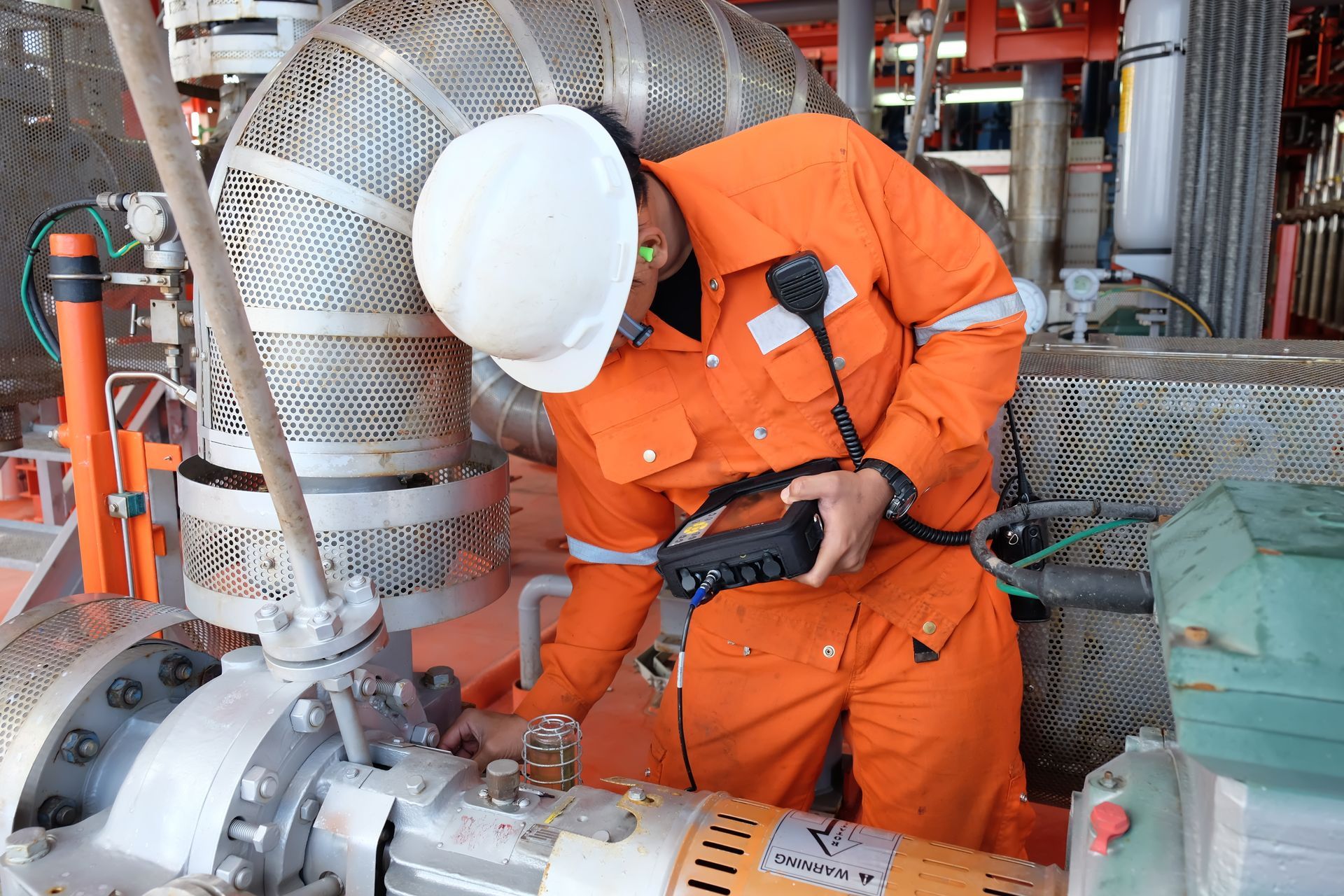
Maintenance crews follow facility-specific service protocols that identify critical components requiring regular inspection, using ultrasonic thickness testing on vessel walls to detect corrosion before it compromises pressure integrity, vibration analysis on rotating equipment to identify bearing wear, and thermographic imaging to locate heat exchanger fouling or insulation degradation. Work is coordinated during planned shutdowns to maximize equipment access while minimizing facility downtime, with replacement parts and materials staged in advance to prevent delays once work begins.
After maintenance cycles are complete, processing equipment maintains design throughput rates without efficiency losses, pressure control systems respond accurately to load changes, and all safety instrumentation functions within calibration tolerances. Regular servicing extends component service life by preventing minor wear from progressing to destructive failure, reducing the frequency of expensive emergency repairs and unplanned production interruptions.
Service includes both routine preventive maintenance performed on fixed intervals and condition-based maintenance triggered by inspection findings or performance monitoring data. Crews document all work performed, parts replaced, and inspection results, creating maintenance records that satisfy regulatory audit requirements and inform future service planning.
Common Questions About This Service
Facility operators managing gas plants balance production demands with equipment reliability, making maintenance scheduling a critical operational decision. These questions address common planning considerations.
What does a typical gas plant maintenance shutdown involve?
Planned outages include isolation and depressurization of equipment, opening of vessels and piping for internal inspection, replacement of gaskets and seals showing wear or leakage, cleaning of fouled surfaces, functional testing of safety devices and instrumentation, and return to service following documented checkout procedures that verify all systems operate correctly before resuming production.
How do maintenance crews minimize downtime during service events?
Work begins with detailed planning that identifies all tasks to be performed, sequences activities to avoid delays, stages replacement parts and materials on-site before shutdown begins, and coordinates multiple work crews to perform tasks in parallel when equipment access allows, reducing total outage duration compared to sequential work execution.
When should preventive maintenance be scheduled for processing facilities in Pittsburg?
Outages are typically planned during periods of lower gas demand or when gathering system activity decreases, often in late spring or early fall when extreme temperature demands are lower and production interruptions have less market impact, though facility-specific factors like equipment condition and operational requirements ultimately determine optimal timing.
What inspection methods identify equipment problems before failure occurs?
Maintenance crews use ultrasonic thickness gauges to measure pipe and vessel wall thickness and detect internal corrosion, infrared cameras to identify overheating components or insulation damage, vibration analyzers to detect bearing wear or mechanical imbalance, and pressure decay testing to locate valve seat leakage that reduces system efficiency.
What documentation does facility maintenance produce?
Service records include detailed work logs identifying tasks performed and components serviced, parts replacement lists with material specifications and serial numbers, inspection reports documenting equipment condition findings, calibration certificates for instrumentation, and photographs of significant conditions discovered during disassembly or inspection activities.
Sandhill Energy Services maintains gas plant facilities across the East Texas region with crews experienced in process equipment service and regulatory compliance requirements. Facility managers can call (903) 285-8154 to arrange maintenance support tailored to operational schedules and equipment conditions.